ATLAS REFERENCE
REG-0004
VOID TUNDRA
CRYOGENIC PERSISTENCE REGION
Cryogenic environmental processes remain stable while suspended continuity persists beneath prolonged thermal equilibrium.
CLASSIFICATION
Atmospheric Null Region
TOPOLOGY
Glacial Monolith Field
SIGNAL CONDITION
Attenuated / Subsurface Resonance
OBSERVER CONDITION
Extended traversal may interfere with temporal estimation and directional certainty.
ARCHIVE STATUS
Fragmented Observation Recovery
KNOWN STRUCTURAL STATE
Inactive Exterior / Unresolved Interior
ENVIRONMENTAL DESCRIPTION
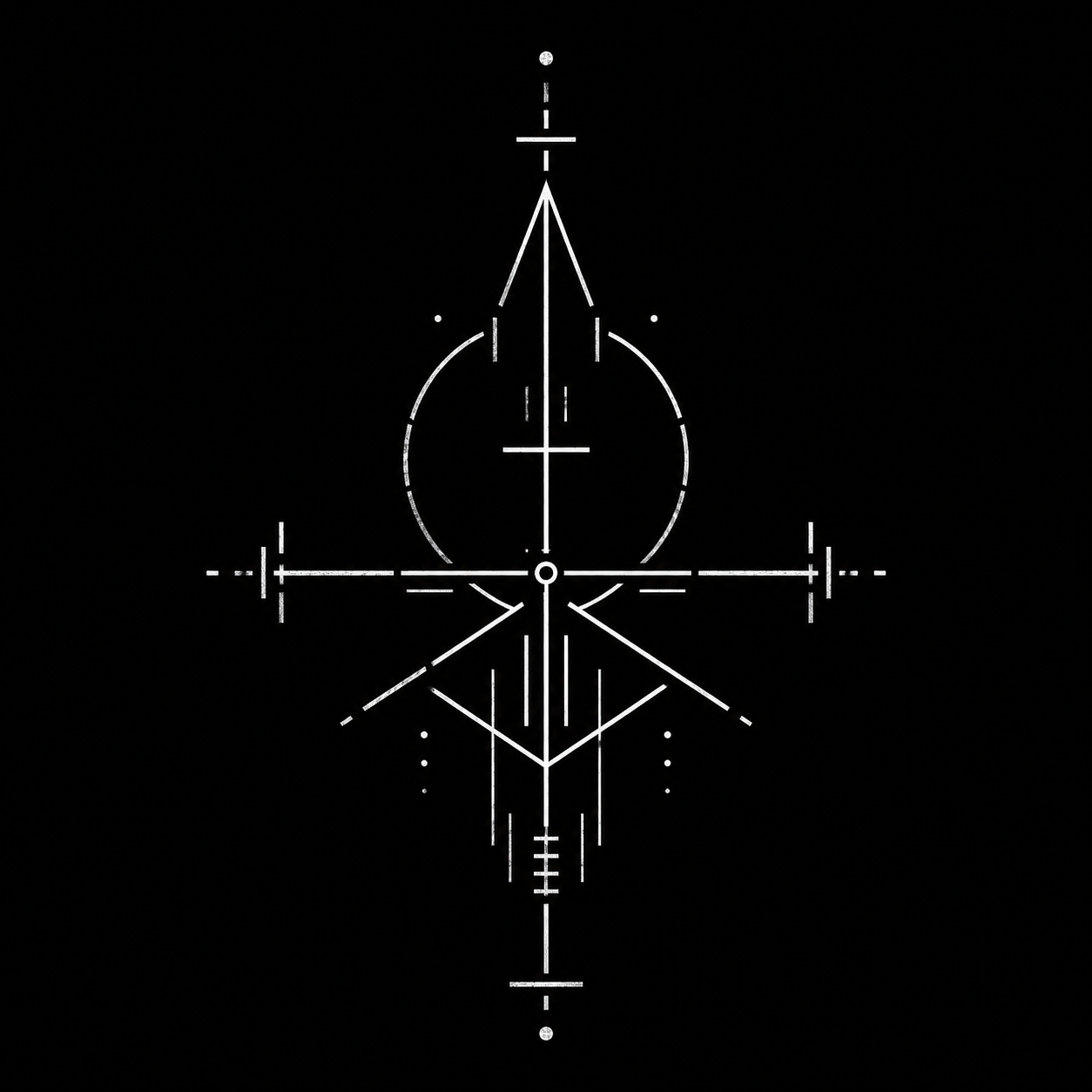
Traversal across Void Tundra sectors remains physically stable, though perceptual consistency gradually deteriorates during extended exposure.
Environmental silence behaves non-uniformly. Acoustic absorption increases toward inactive monolith fields and glacial convergence zones.
Void Tundra presents as an immense frozen basin containing collapsed signal structures, buried architectural remains, and atmospheric resonance corridors extending beyond the visible horizon.
Observers report intermittent monolith activity beneath storm conditions, transient illumination within glacial strata, and large-scale structural forms partially obscured by persistent atmospheric whiteout.
Temperature readings remain inconsistent between observation cycles. No confirmed terminal boundary has been documented beyond the northern sectors.
TOPOLOGY / SIGNAL CONDITIONS
VT-TOP-0001
TOPOLOGY RECORD
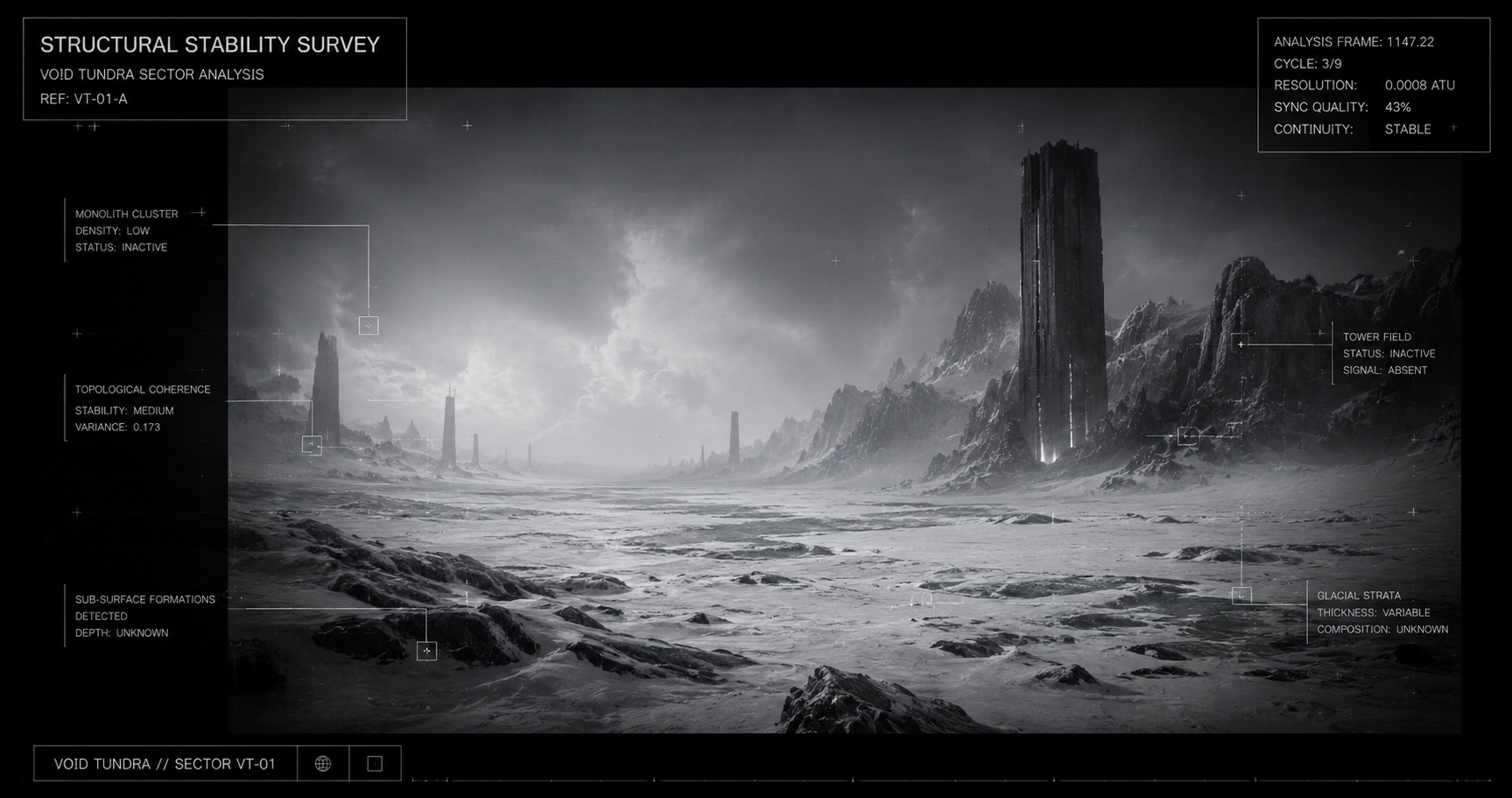
Frozen terrain across Void Tundra sectors remains physically stable
during initial traversal cycles.
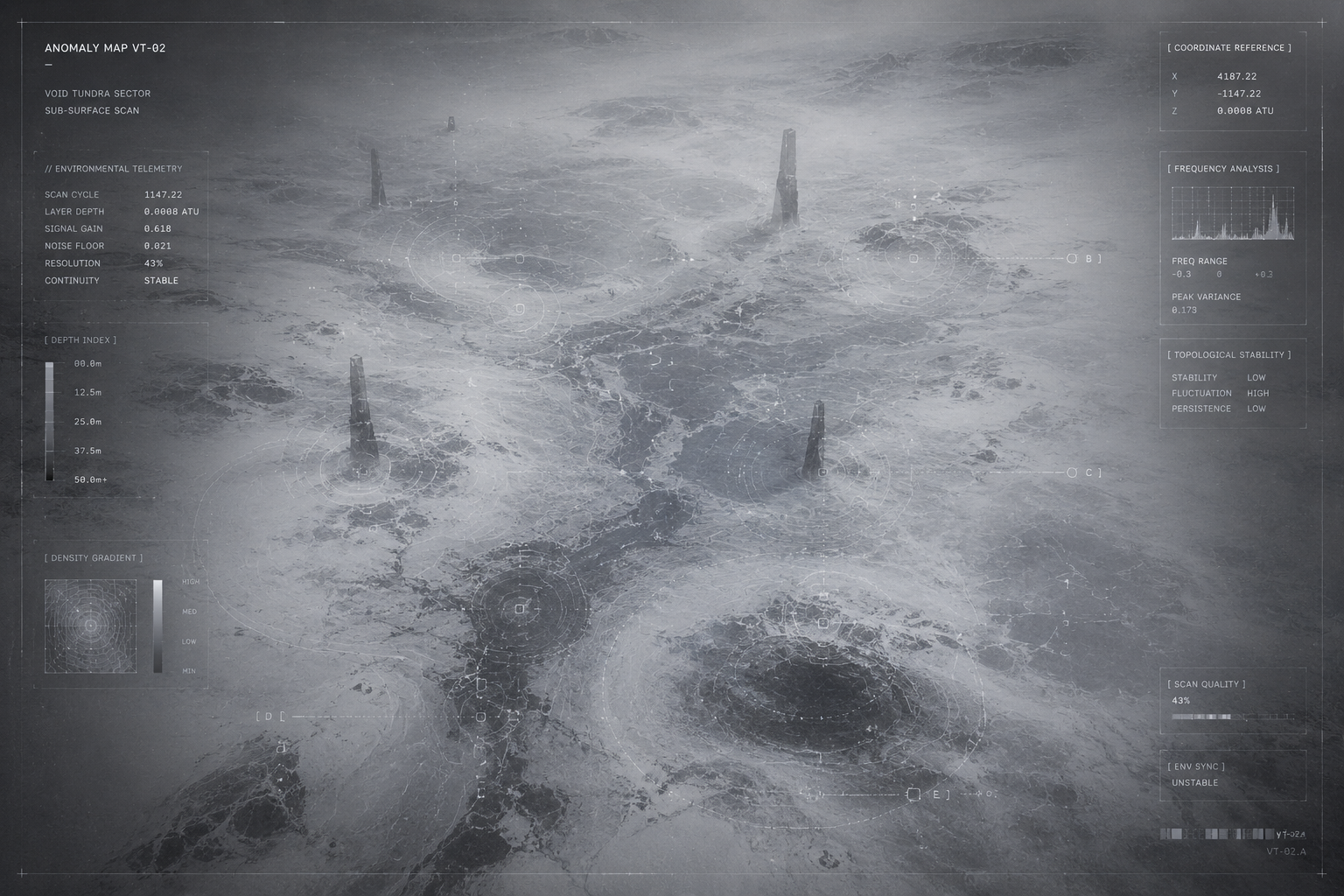
Subsurface architectural formations have been detected beneath
glacial strata and inactive monolith fields.
No confirmed terminal boundary or central structural origin
has been documented.
VT-SIG-0001
SIGNAL RECORD
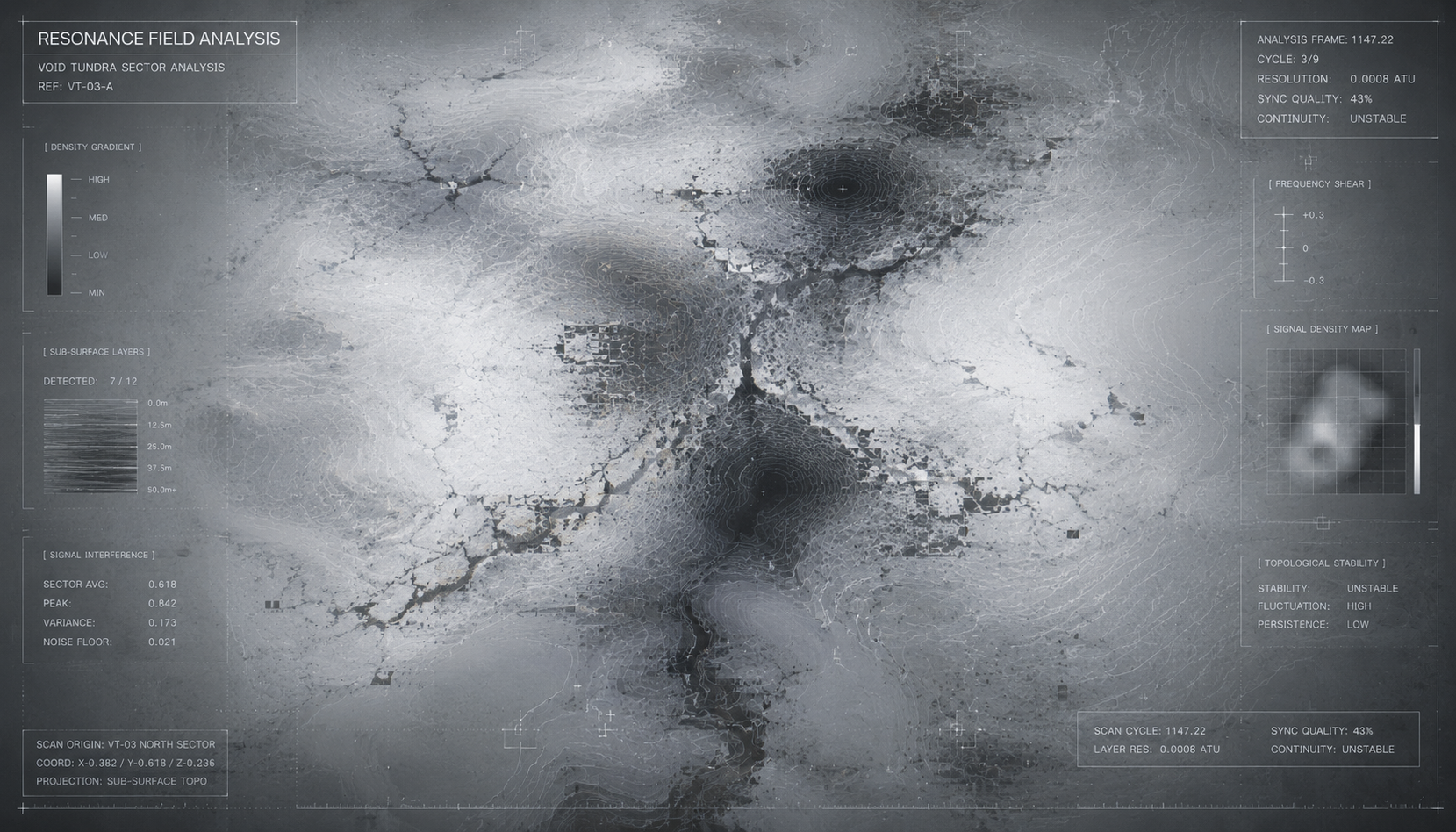
Localised atmospheric resonance increased toward inactive
tower sectors.
Sub-surface signal activity remained detectable beneath
frozen terrain layers.
Environmental frequency mapping remains unresolved.
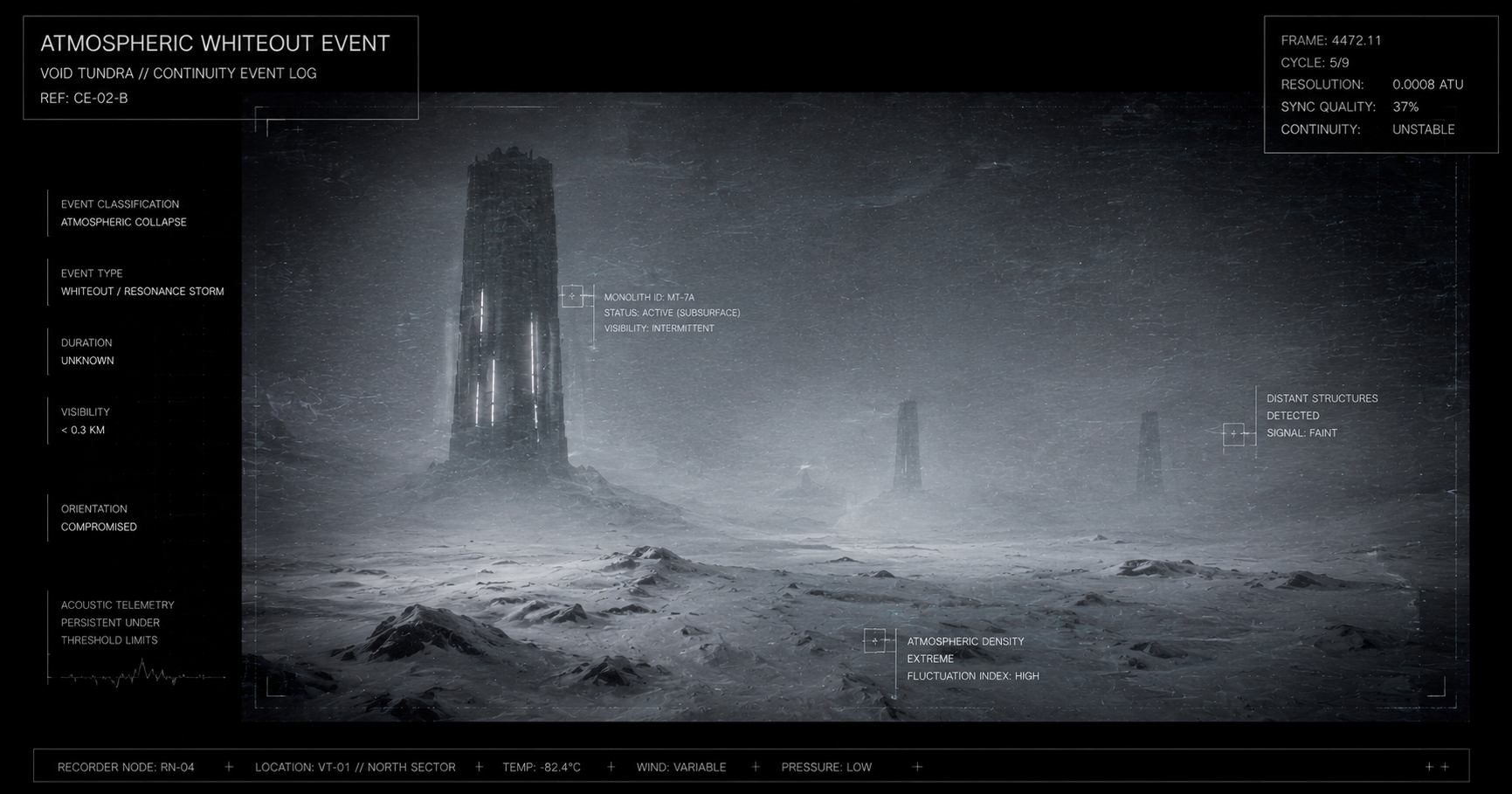
VT-OBS-0001
OBSERVATION RECORD
Observer orientation failed during prolonged exposure to
resonance storm conditions.
Distant monolith structures remained visible following
atmospheric collapse.
Acoustic telemetry persisted beneath recorded wind
threshold limits.
ASSOCIATED ENTITIES

AUREXIA
Entity correlation remains exclusive to high-alignment
observation cycles.
Local structural stability increased following Aurexia
manifestation despite regional signal degradation.
No verified arrival, departure, or origin sequence has been
documented.
ANOMALY RECORDS
VT-ANM-0001
THERMAL STASIS
Surface temperatures remained unchanged throughout multiple observation cycles despite external environmental variation.
VT-ANM-0002
CRYOGENIC PRESERVATION
Organic and structural degradation ceased within isolated survey sectors.
Long-term continuity remained unaffected.
VT-ANM-0003
FROST RESONANCE
Low-frequency structural resonance propagated through frozen terrain without measurable energy loss.
VT-ANM-0004
GLACIAL DISPLACEMENT
Survey markers shifted relative to surrounding ice formations while remaining fixed within Registry coordinates.
ARCHIVE RECORDS
VT-RCV-0021
Signal reflections continued beneath the ice after all tower activity ceased.
VT-SRV-0083
Atmospheric resonance patterns remained stable despite full environmental shutdown.
VT-SIG-0007
Atmospheric resonance patterns remained stable despite full environmental shutdown.
DOCUMENT TYPES
OBS — Observation Record
SRV — Survey Record
RCV — Recovery Archive
ENT — Entity Encounter
ANM — Anomaly Record
SIG — Signal Record
ENVIRONMENTAL EVENTS
EVENT REGISTRY
VT-EVT-0001
FIRST SIGNAL FIELD
CURRENT STATUS
Verified
PRIMARY RECORD
VT-ER-0008
SUMMARY
The earliest verified sub-surface resonance field was recorded
beneath inactive glacial sectors, establishing Void Tundra as a
persistent low-frequency transmission region.
VT-EVT-0003
GLACIAL WHITEOUT EVENT
CURRENT STATUS
Restricted
PRIMARY RECORD
VT-ER-0010
SUMMARY
Atmospheric attenuation exceeded operational thresholds,
obscuring long-range observation while preserving intermittent
structural visibility beyond the storm front.
VT-EVT-0002
TOWER SILENCE EVENT
CURRENT STATUS
Stable
PRIMARY RECORD
VT-ER-0009
SUMMARY
Multiple inactive monoliths simultaneously ceased measurable
signal emission without any corresponding environmental
transition or structural change.
VT-EVT-0004
AUREXIA MANIFESTATION
CURRENT STATUS
Verified
PRIMARY RECORD
VT-ER-0011
SUMMARY
The first verified Aurexia manifestation coincided with a
temporary increase in regional structural coherence despite
continued atmospheric null conditions.

STATUS
Verified
INDEX
VT-0004
REG-0000
REGISTRY
CONNECTED REGIONS
REG-0010
OBSIDIAN MOUNTAINS
────────
REG-0001
ECHO FAULTS
────────
REG-0013
BOUNDARY VERGE
DESCENT / EXIT